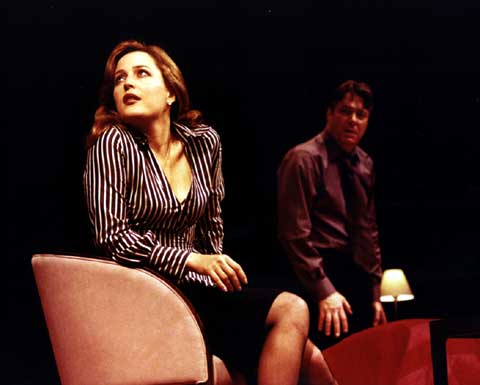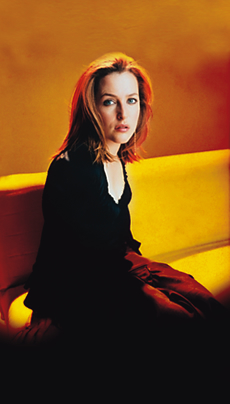
In December 2002, I talked my way into interviewing Gillian Anderson. I was editing a web site for a play called ‘What The Night Is For’ in which Gillian had been cast as the lead. I told the powers that our web site could genuinely benefit from an ‘exclusive’ interview – something the public could only read on our pages, one that featured Gillian saying something new, something about the play itself, rather than just rattling on about some science fiction TV show that she used to be in. This was all actually true – no other journalist was going to interview Gillian in 2002 without mentioning the X-Files, and precious few would dive sufficiently deep into the story of the play itself. If we were going to generate the right kind of press, we were going to have it do it for ourselves. Or rather, I was going to have to do it myself. Filled with a strange brew of confidence and white-knuckle fear, I put my own name forward. I had some experience in this field, I had edited a few publications in my time… And thus the die was cast.
Truth be told, it had been four or five years since i last interviewed someone even remotely famous and that was a three-piece near-teen girl band called ‘Cleopatra’ – an interview which broke world records of brevity. “So, who inspired you to start this surely short-lived pop career?”. Cleopatra (‘comin’ atcha’), replies: ‘Michael Jackson’. [Interviewer struggles not to think about the feeling of cold revolver steel rattling against his teeth]. I bolted from that interview after ten minutes. Their publicist looked disturbed, telling me i’d been booked in for an hour. Sixty minutes? I asked about fifty questions in the last ten, so how did she suppose i could possibly get to sixty? I was about to say something possibly very rude to nice Mrs Publicist Person when I felt a tug at my jacket. Looking down about four feet, I saw a chubby little Cleo-face grinning back at me and a small voice pleaded ‘can we sign a CD for you?’. Nothing can prepare you for that moment, absolutely nothing.
I needed to get back on the horse, needed to put on my game face. I could do this – I could sit down in a room with Gillian Anderson. Me. And Gillian Anderson. Dana Scully, lead Scientific Investigator of the X-Files.
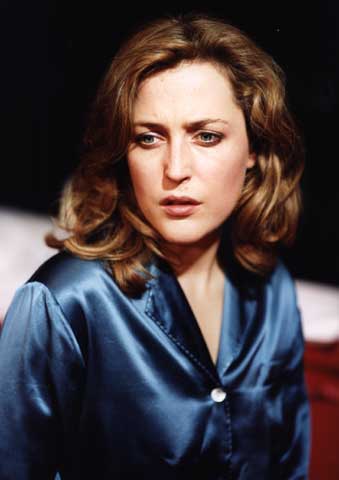
Irrespective of what you think of the show, you have to accept that it was – in its heyday – one of the most popular shows on the planet. You have to accept that as shared experiences go, literally tens of millions of people have watched the same footage of Gillian standing in a Canadian forest, gun in hand, shouting ‘Mulder!’. As she does, every episode, week in week out, for nine seasons, twenty-two episodes per season. That’s 198 episodes, each averaging 42 minutes each, giving us 8,316 minutes worth of ‘weird stuff happening’. And even when her co-star bailed out on her so disrespectfully, Gillian stood her ground. even in the closing seasons, in the face of arcane plots and tortuous twists – she bravely kept a straight face, feigning interest in whether her baby was actually an alien-human-hybrid-slash-supersoldier. What a trooper.
Some clever bastard decided that fans of the show would be christened ‘X-Philes’ – and, yes, I was one of those people. I used to buy the videos before they were screened on TV as i couldn’t bear to think that i would be lagging behind. I used to tape it religiously every week and archive them chronologically, episode by episode. And I nearly had a breakdown when i missed the middle part of the ‘Duane Barry’ trilogy arc. All of this is true.
So with those caveats in mind, how the hell was I going to find the required expertise to actually interview this woman, and to simultaneously keep still my beating heart, stop myself from laughing at all the wrong moments and, of course, being above such things, not mention the X-Files?
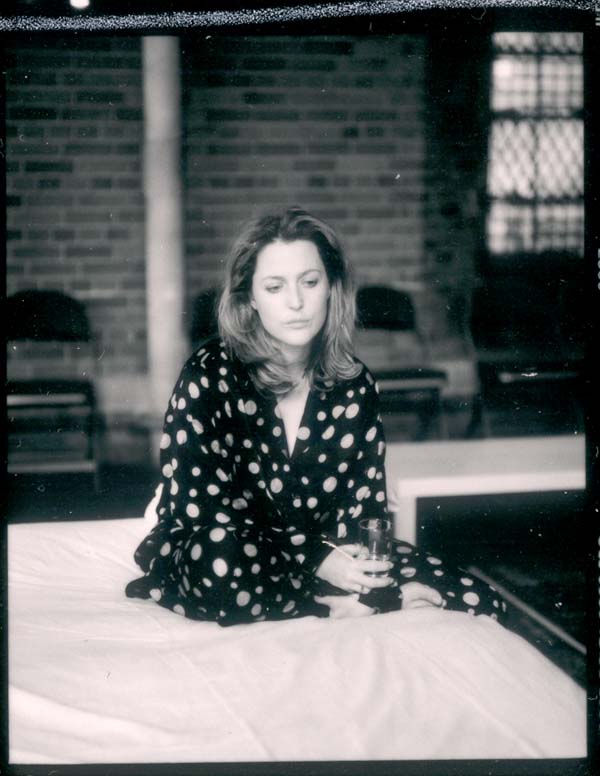
Four months after I made the suggestion, I’m there – I’m in Gillian Anderson’s dressing room, watching her sitting on her bed, with her legs tucked under herself, rolling up cigarette after cigarette. Seconds after meeting her, one thing became abundantly clear – and it was to be my ultimate undoing. Gillian Anderson and Dana Scully are two different people.
Laughable though this sounds, trust me on this one. They could actually be two different people. Dana seems taller and far more commanding, Gillian is tiny – and by that I mean she is Kylie-small, she is ‘put her in your pocket’ minute, and so on. And then there’s the accent – Dana’s north american twang is hard to pin down, yet Gillian speaks in perfect BBC english. She even uses the word ‘oneself’ over and over again throughout the interview. It’s disconcerting to say the least. And then there’s her presence – Dana is a federal agent and a doctor, the height of guarded professionalism, whereas Gillian wouldn’t be out of place in Haight-Astbury, surfing on a cloud of pungent smoke and bloody good vibes.
To kick things off, I fumble with my tape recorder and make a lame attempt at trying to make Gillian trust me by reeling of my credentials. I’m not really a stalker-freak, I’m actually here to talk about the art… but I don’t think she’s actually bothered in the slightest.
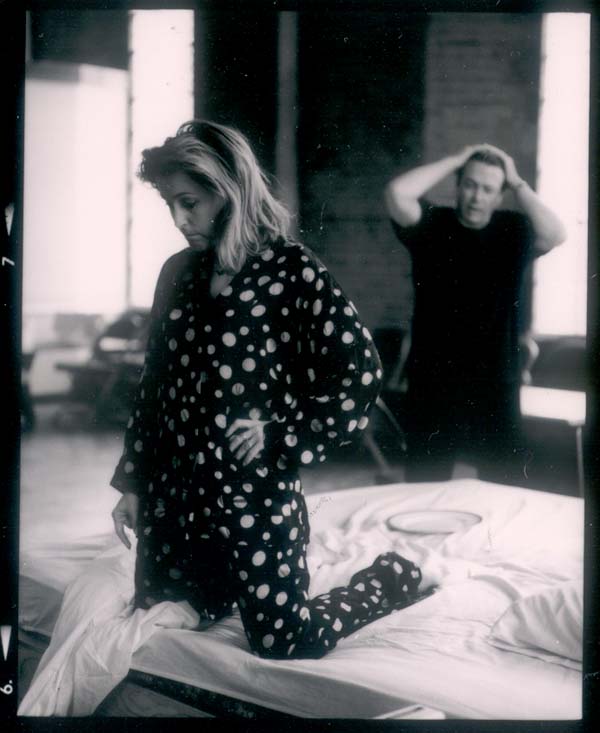
As for the play (the very reason that has brought us together), it had a bumpy ride with the London critics who were less than gushing with their praise. I don’t believe it was necessarily the fault of the play itself, it was simply that those same critics were used to an embarassment of theatrical riches in London – from the Royal Court, the National the Bush, the RSC and countless independent companies. You needed to bring something special to the table if you were going to compete local product. By comparison, the imported ‘What The Night Is For’ was somewhat softer around the edges, choosing to focus its sights on the marital neuroses of the American middle-classes. It was by no means a bad play, it simply suffered in the face of tough opposition. The fact that Nicole Kidman, Gwyneth Paltrow and Madonna had all recently premiered their own ‘celebrity vehicle’ in the city didn’t particularly help matters.
Given such multi-faceted opposition to the work, I couldn’t help but wonder what had prompted Gillian to sign on the contractual line? She described is as “the perfect vehicle” for the West End debut, “a somewhat daunting but perfect challenge”. Her character, Melinda Metz, is a married mother of two, thrown back together with an old flame during an out-of-town conference. Throughout the play, they dance around their feelings and their obligations, continually assessing and re-assesing the choices they’ve made throughout their life, and wondering what particular type of curveball fate has now thrown them.
“I identified very much with the character”, she said, “and also I loved the conversation the two of them have. I love the honesty, the awkwardness, the whole concept of ‘if we’re unhappy in our present situation and have been for many years, is it important to be happy with someone else or to make the present thing work?’. In any relationship, each individual has their own stuff that they bring to the table, and each will have their own perspective on how the other one is or is not living up to their side of the arrangement. Sometimes you meet couples who are great people and trying very hard to be the best that they can be – but at the end of the day it doesn’t work, because they both have their own failures and neuroses. But if they were with someone else, a better side of them may be brought out, – that’s an interesting way to approach it, where there’s no ‘bad guys’ as such”.
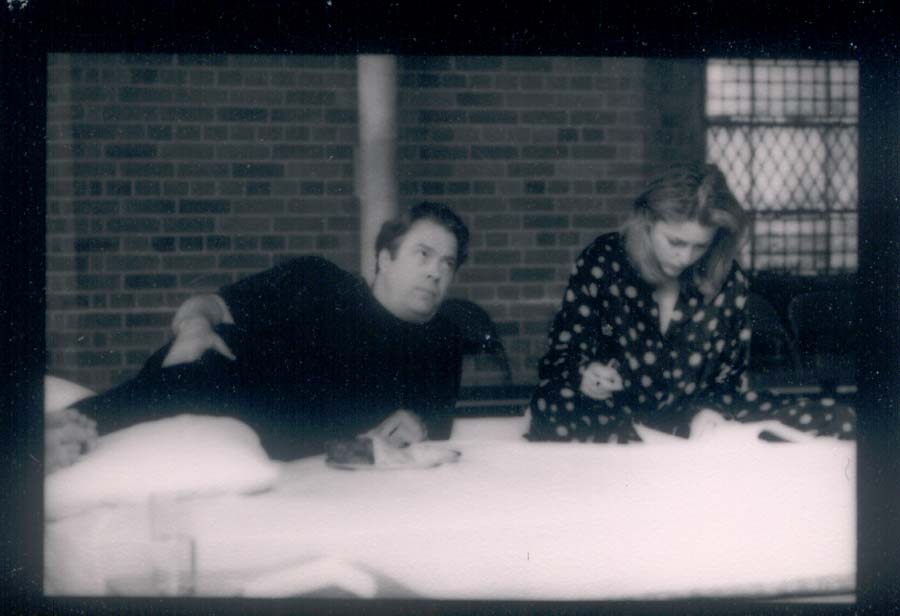
Gillian had obviously spent a long time working through her motivation – thankfully so, as her analysis of the situation gave us a great deal more to talk about. Anything to take the focus off my own clear and present insecurities.
“As human beings we tend to get ourselves in relationships with people, and we get comfortable. We have some kind of attachment to being the good guy or the bad guy, the victim or the saviour, and we play out these roles. Even though we can complain about them, we can’t get away from it. And when we then move onto another relationship, we’re going to play out exactly the same role”.
Not all of these ideas are actually exposed in ‘What The Night Is For’, something Gillian readily admitted:”There are areas that the play does not go in that I wish they would, but I think it leads people to have those conversations – I like that it makes the audience a bit uncomfortable”.
Truth be told, the majority of the audience was not at all uncomfortable. They were, in fact, enraptured. Gillian’s fan base was significantly large and, most interestingly, significantly dominated by women. Both of these facts had not escaped our attention when building the play’s web site and – in a moment of cocky bravado – we put tickets on sale on the web before the venue or the dates had even been confirmed. Result: hundreds of tickets sold within hours of them going on sale. Baffling.
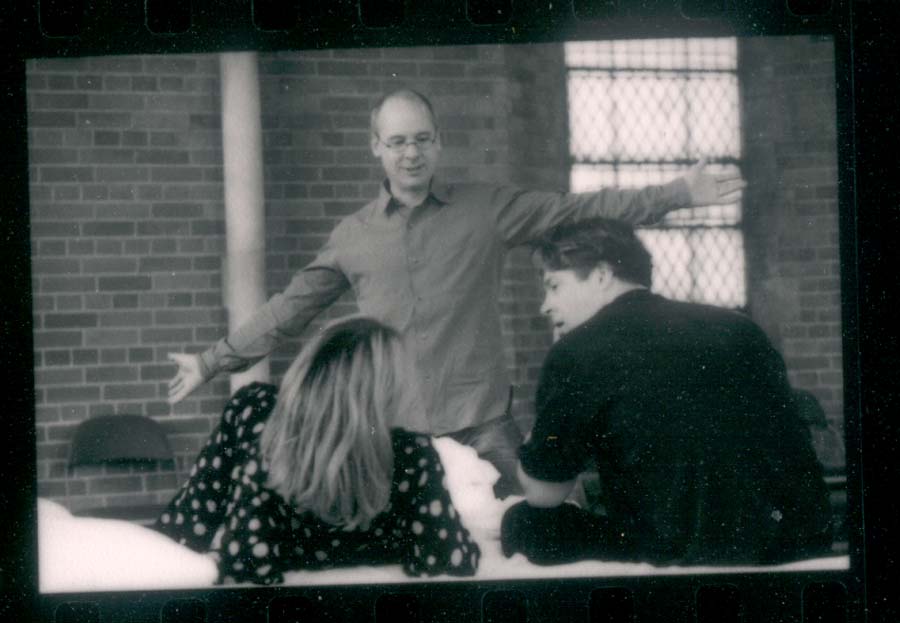
The audience demographic had not escaped Gillian’s attention: “The degree to which people are going in order to come and see the play is a bit surprising. People have been saving up for a year so that they can come, traveling from israel, portugal & spain. The fact they’re seeing theatre – whereas normally they may not – is amazing and wonderful”.
Perhaps not quite so wonderful when they started taking flash photography during the first act. A practice absolutely frowned upon in dusty British theatres. I’m sure I would have stopped the play and made the guilty parties confesss their crimes, but Gillian was a little more calm. “It just shows the reality of the fact that these people were are used to theatre. The audience is a big part of the relationship and they do affect the performance, but they also draws things out, drawing the play further out into where it’s meant to be. Some nights you’re thinking ‘oh my God, they hate us’ and some nights you’re really surprised by the warmth and generosity. It’s different every single time”.
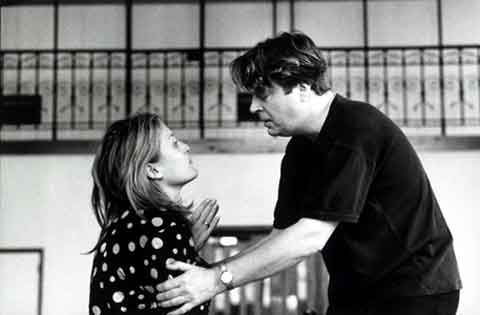
Once we drift away from the subject matter of the play, Gillian notably detaches from the proceedings and, as we talk further, her reluctance to facilitate any further discussion becomes apparent. I pull a few reserve questions from the bag, hoping to gleam some interesting nuggets from her extra-curricular activities, but it’s not to be. We’re not going anywhere near there.
Finally I call a halt and start pack away my little tape recorder. As I do so, I get the odd feeling that the jolt of the conclusion has enlivened her. She smiles, possibly for the first time, and her face actually betrays a slight concern, thinking perhaps from her own point of view: “was that any good?” Gillian Anderson, smiling back at me with a look that said “was that any good?”. Just like Cleopatra – nothing can prepare you for that moment, absolutely nothing.
Gillian Anderson swapped navel-gazing for bat swinging in a 2004 stage production at the Royal Court entitled “The Sweetest Swing In Baseball”. The Guardian called it “an astonishing performance”, whilst the Observer commented: “Audiences may go to see a celeb, but they’ll leave having seen an actor”. Stuart Buchanan stopped making web sites for West End productions in 2003 and, since then, has never stepped foot back inside a theatre. He is, however, very much looking forward to seeing Dana Scully in the new X-Files movie.